- Home
- Health
Cat Illnesses and Other Health Problems. Symptoms and Diagnosis
What Happens When Your Cat Gets Sick?
Cat illnesses can be difficult to diagnose – cats are masters at hiding pain and a number of health problems have similar symptoms. Properly looked after, cats are generally pretty healthy creatures, but what do you do when your cat gets sick?
A cat's health can deteriorate rapidly – within 24 hours in some cases – so it's very important not to delay getting professional help.
It's essential to consult a veterinarian whenever you suspect that all is not quite right with your cat, or worse, that your cat may be actually be seriously ill.
It's useful, though, to have a little knowledge of some of the minor and major illnesses and the things that might go wrong with your cat's health.
This section covers some of the common and not-so-common health
problems you may come across, although it's very unlikely that you'll
encounter more than one or two of them during your cat's life.
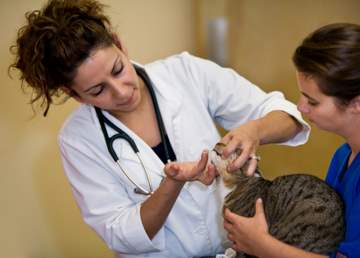 Diagnosing illnesses is best left to a veterinarian
Image © iStockphoto | Dennis Guyitt
What Are Some of the Things That Can Go Wrong?
Let's take a look at some of the more common illnesses and health problems:
- Allergies
- Constipation
- Diarrhea in cats
- Diarrhea in kittens
- Ear mites
- Eye problems
- Fleas
- Gum disease
- Hairballs
- Mange
- Ringworm
- Urinary tract infections
- Vomiting
And Some of the More Serious Cat Illnesses
- Anemia
- Anorexia
- Arthritis
- Asthma
- Cancer
- Diabetes
- Distemper
- Heart Disease
- Hyperthyroidism
- Inflammatory / Irritable Bowel Disease
- Kidney Disease / Renal Failure
- Lyme Disease
- Pancreatitis
- Rabies
Cat Illness Diagnosis
Diagnosing feline health problems is definitely best left to a professional. Always consult your veterinarian for advice – don't attempt to diagnose or treat illnesses yourself.
Signs and Symptoms of Cat Illnesses
How do you go about recognizing that your cat is sick? Some of the signs that they're in trouble are listed below.
These may not always mean that your cat is seriously ill, but
it's always better to be safe than sorry, so you should get your cat
checked out by a veterinarian if they show signs of any of the
following:
- Difficulty breathing
- Persistent coughing
- Runny or watery eyes or nose
- Bleeding from a wound or anywhere else on the body
- Repeated vomiting
- Repeated diarrhea
- Not eating (especially if longer than 24 hours)
- Not drinking
- Fitting, seizures or repeated twitching
- One or both pupils don't respond to light
- Unable to stand upright or walk normally
- Walking in circles or bumping into things
- Increase in drinking and urinating
- Trouble urinating, or peeing outside the litter box
- Unexpected weight gain or weight loss
- Appearance of any unidentified lumps or bumps
- Has loose skin or an 'open' coat
- Generally looks unwell, uncomfortable, not responsive
- If pregnant, difficulty giving birth
More About Cat Care:
Some of the articles and newsletters on this site may contain links to products I think you may enjoy. If
you purchase through these links I receive a small commission, but there's
no extra cost to you. Find out more on the Affiliates Disclosure page.
Have You Discovered Our Newsletter?
If not, why not? Subscribe to our email newsletter, Meezer Musings, to stay in touch, be the first to see new information and pages as they come out, and read the things we only talk about in the newsletter.
Learn more about it on our Newsletter Sign-Up page.
First Visit Here?
Below you'll find links to some of our popular articles, topical pages, newsletters and other items of interest.
Click the images or links below them to visit those pages.
FTC
Disclosure: If you make a purchase via a link on this site, I may
receive a small commission, at no extra cost to you. See our Affiliates Disclosure for further details.
Most Popular Pages



Meezer Musings -
Latest Newsletters


Find Us on Facebook
Information provided on this website is not intended to replace professional advice.
If you have any concerns at all about your cat's health, please consult a vet.
Life with Siamese
Cats does not sell any personal information from this website.
To find out more please see our Privacy Policy.
Copyright © 2009-2024 Caroline Haines, Life with Siamese Cats. All Rights Reserved.